
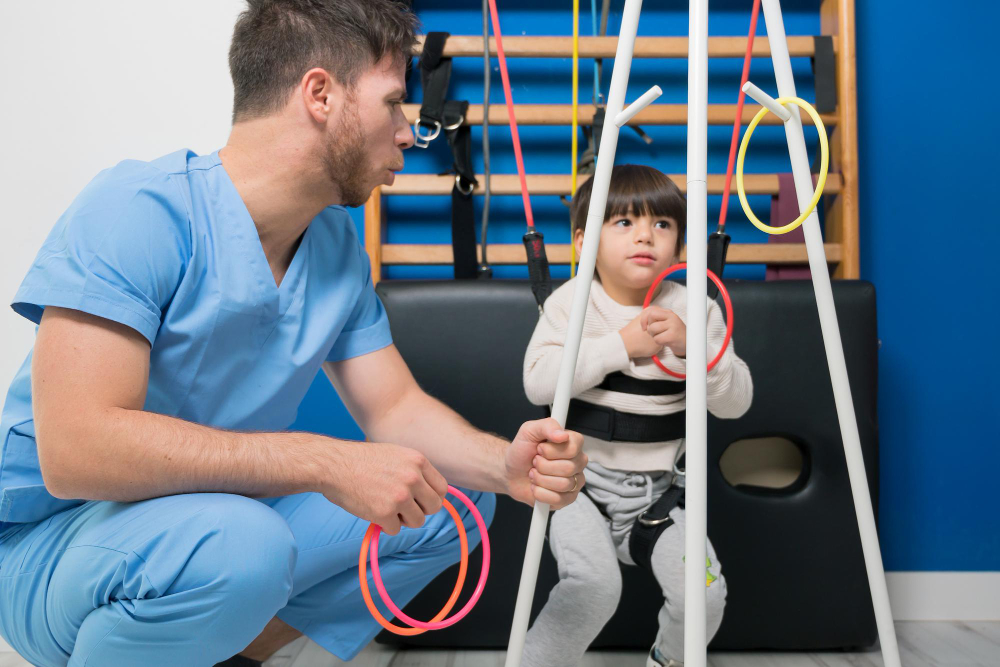
Developmental delay in children means a child is not reaching certain milestones at the expected age. These milestones include sitting, walking, or talking. Physiotherapy for developmental delay in children can help improve movement, strength, and coordination. Early intervention physiotherapy and pediatric physiotherapy for developmental delay support children in reaching their full potential. Child development therapy uses special exercises and play to help children grow and learn. With the right support, many children make great progress.
What Is Developmental Delay in Children?
Developmental delay happens when a child does not develop skills at the same rate as others their age. For example, some children may walk or talk later than expected. Sometimes, delays affect movement, speech, or learning. According to the CDC, about 1 in 6 children in the United States has a developmental delay or disability. Early signs may include:
Because these delays can impact learning and daily life, early support is important.
How Physiotherapy Helps Children with Developmental Delay
Physiotherapy for developmental delay in children aims to help them move better and gain independence. It uses fun activities and exercises to build strength and skills. As a result, children can reach important developmental milestones. The main benefits of pediatric physiotherapy for developmental delay include:
With regular sessions, children often show steady progress. Moreover, family involvement can make therapy even more effective.
Common Physiotherapy Approaches and Techniques
Pediatric physiotherapists use many evidence-based methods to help children with developmental delay. For example, play-based therapy turns exercises into games, making sessions fun and engaging. In addition, motor skills training helps children practice movements like crawling, standing, or walking. Some common approaches include:
Because every child is unique, therapists create a plan that fits each child’s needs. According to the World Health Organization (WHO), early and regular therapy can lead to better outcomes.
What Parents Should Expect During Physiotherapy
At the first visit, the physiotherapist will assess your child’s movement and skills. They may ask about your child’s medical history and daily activities. Next, they will set goals and create a therapy plan. Each session usually includes:
Parents play a key role in their child’s progress. For example, practicing exercises at home can help children improve faster. Additionally, open communication with the therapist ensures the best results.
Prevention and Early Intervention
Early intervention physiotherapy is very important for children with developmental delay. When therapy starts early, children have a better chance to catch up with their peers. According to the CDC, early support can improve learning, movement, and social skills. Therefore, parents should watch for signs of delay and seek help as soon as possible. Timely therapy can prevent further problems and support healthy growth.
When to Consult a Specialist
Some signs may show that your child needs physiotherapy or child development therapy. You should consult a specialist if your child:
If you notice any of these signs, contact a physiotherapist or visit physiotherapy clinics near you. Early assessment and rehabilitation for children can make a big difference.
Consult a pediatric physiotherapist at Dr. Krishna’s Physiotherapy and Rehabilitation Center for personalized advice on developmental delay in children.